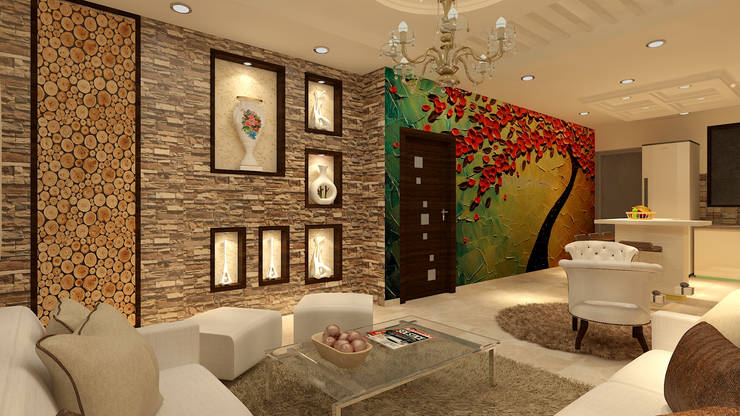
HOW DO YOU LAYOUT LIVING ROOM FURNITURE?

When it comes to decorating a home, there are few things more intimidating than standing in an empty room and not knowing where to start. Filling out the space actually makes a room feel less confined. If not laid out properly, you can end up with a living space that feels unappealing and less comfortable to you and to your visitors. There are so many things to consider, that is, personal aesthetic, lifestyle, budget and more but the best way to begin is with the furniture layout. In other words, determining the arrangement of sofas, chairs, tables, storage cabinets and anything else that is involved in the room’s floor. There are living room layout ideas which will make the job of arranging furniture and decorating your home easy and enjoyable. The first is;

  1. Measure the living room from wall to wall, making note of the length of the room.
  2. Decide on a focal point.
  3. Arrange tables, storage cabinets and ottomans
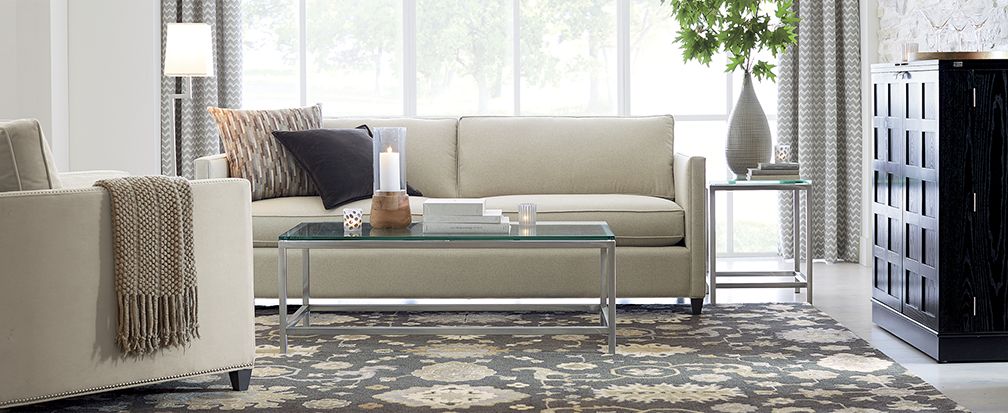
Living Room Layouts

4. Assign floor and table lamps.Floor lamps take the place of side tables, so the coffee table should come within arm’s reach so guests can set drinks down.

5. Center your area rug.

The last element of a living room furniture layout is also the easiest, to center the rug. This should be centered in the middle of the main seating arrangement and extend a few inches beyond the sofa and chair to anchor the entire room. If the room is already carpeted, adding a thicker accent rug on top is a nice way to add warmth and encourage guests to relax and stay awhile.
CHOOSING A THEME COLOR FOR YOUR HOME

Nothing is as personal as colors.


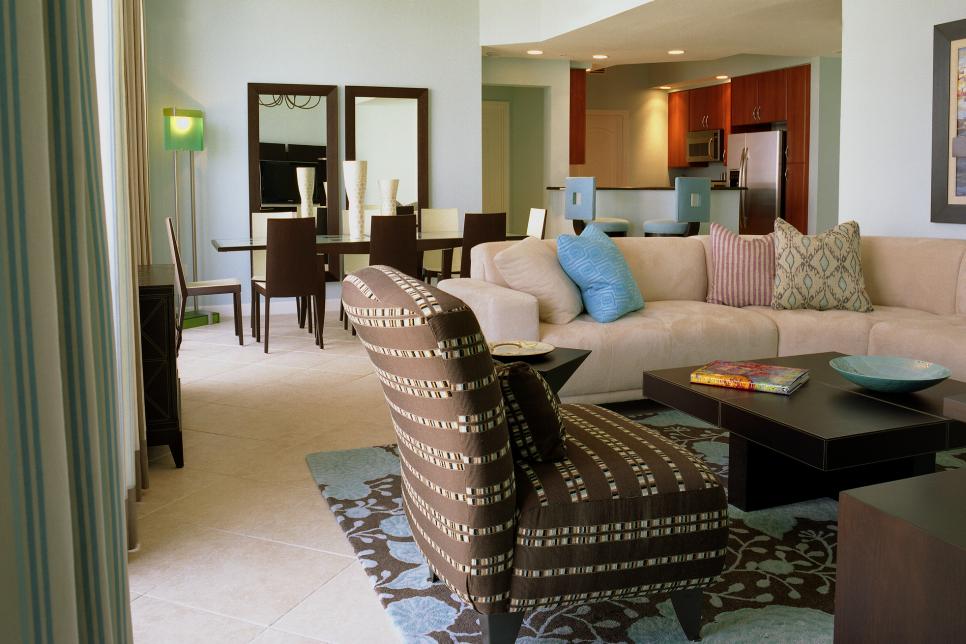
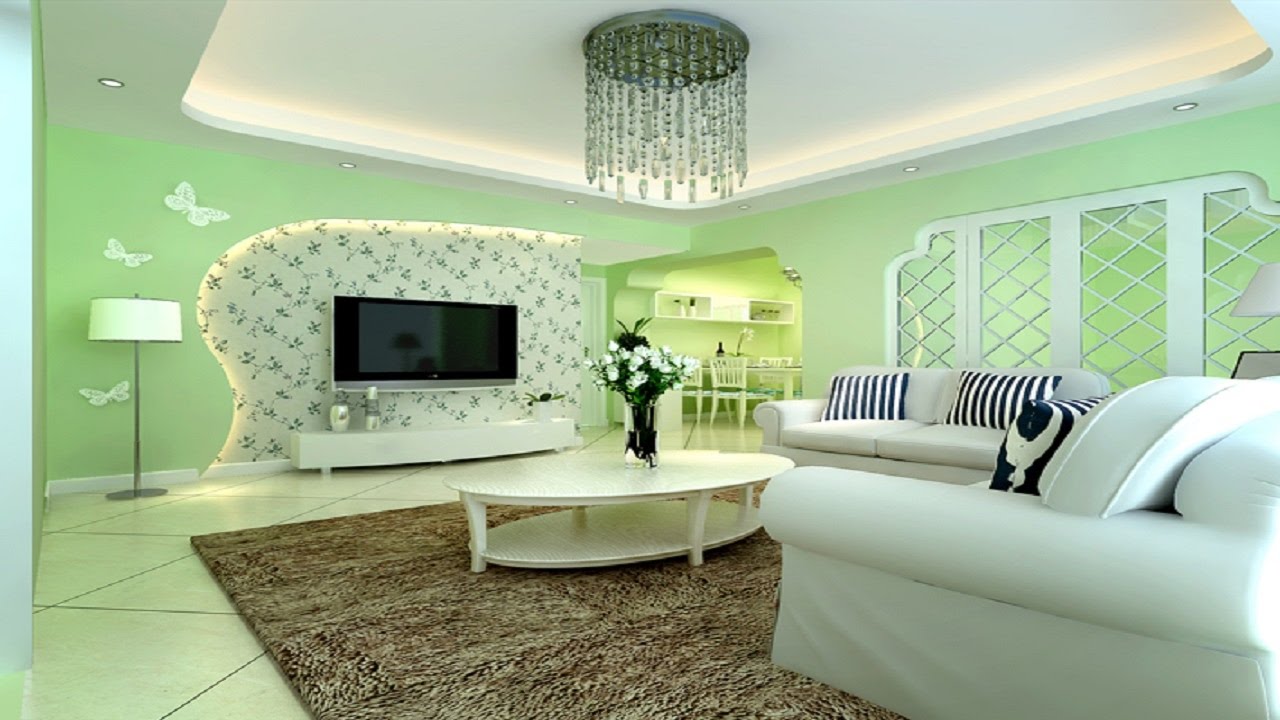
If only choosing a color palette for your interiors was that easy. Well …. actually, it is! Create an effortless and versatile color scheme, the trick is to keep the values of each color consistent, like the dark-brown furniture that ties into the brown of the rug. This frees you up to surprise with accents in similar saturation, but different colors. Start with the formal areas of the house. Specifically, the living room, dining room and entry way. Choose a color scheme for those areas first, then pull one color from the scheme.

Use your color wheel to help you create your own color scheme that best fit your your personality. There are 4 kinds of possible color schemes.

  1. Monochromatic. The monochromatic color scheme uses tone on tone of the same color with the addition of white or black to lighten or darken the color. For example, in this scheme blue can become a pale sky blue or a dark midnight blue and all three hues of the same shade are used to create this effect.
  2. Analogous. The analogous scheme uses colors that appear next to each other on the color wheel. For example yellow will be used with green or orange, or blue will be used with green or purple. This creates a colorful and often soothing palette.
  3. Contrast. The contrast scheme is more dramatic. Here a triad of contrasting colors are used, such as yellow-orange, green-blue and red-purple. This introduces more color and energy into your home’s palette.
  4. Complementary. Lastly we have the complementary scheme where two opposing colors, such as blue and orange, are used together to create a dramatic, bold and high energy color scheme.

ALL ABOUT INTERIOR DESIGN

Art and science of living in a healthier environment.

Interior design is a multifaceted profession that includes conceptual development, space planning, site inspections, programming, research, communicating with the stakeholders of a project, construction management, and execution of the design.
Interior design implies that there is more of an emphasis on planning, functional design and the effective use of space. An interior designer in fine line design can undertake projects that include arranging the basic layout of spaces within a building as well as projects that require an understanding of technical issues such as window and door positioning, acoustic and lighting. Although an interior designer may create the layout of a space, they may not alter load-bearing walls without having their designs stamped for approval by a structural engineer. Interior designers often work directly with architects, engineers and contractors.
Interior designers must be highly skilled in order to create interior environments that are functional, safe, and adhere to building codes and regulations. They go beyond the selection of color palettes and furnishings and apply their knowledge to the development of construction documents, occupancy loads, healthcare regulations and sustainable design principles, as well as the management and coordination of professional services including mechanical, electrical, plumbing, and life safety, all to ensure that people can live, learn or work in an innocuous environment that is also aesthetically pleasing.

Design a site like this with WordPress.com
Get started